

UK retailer Marks & Spencer (M&S) has published a research paper titled Bridge Britain’s Fibre Gap, finding that a quarter of consumers struggle to identify fibre-rich food sources.
The research found that the average UK adult only eats 16.2g out of the 30g daily fibre requirement, while 92% of consumers want support on increasing their fibre intake.
With consumers struggling to identify fibre-rich foods, M&S has announced it is calling for clearer and more consistent on-pack labelling to support individuals to meet the 30g daily recommendation. Currently, the retailer labels grammage of fibre on all its product packets, but this is not mandatory under current legislation.
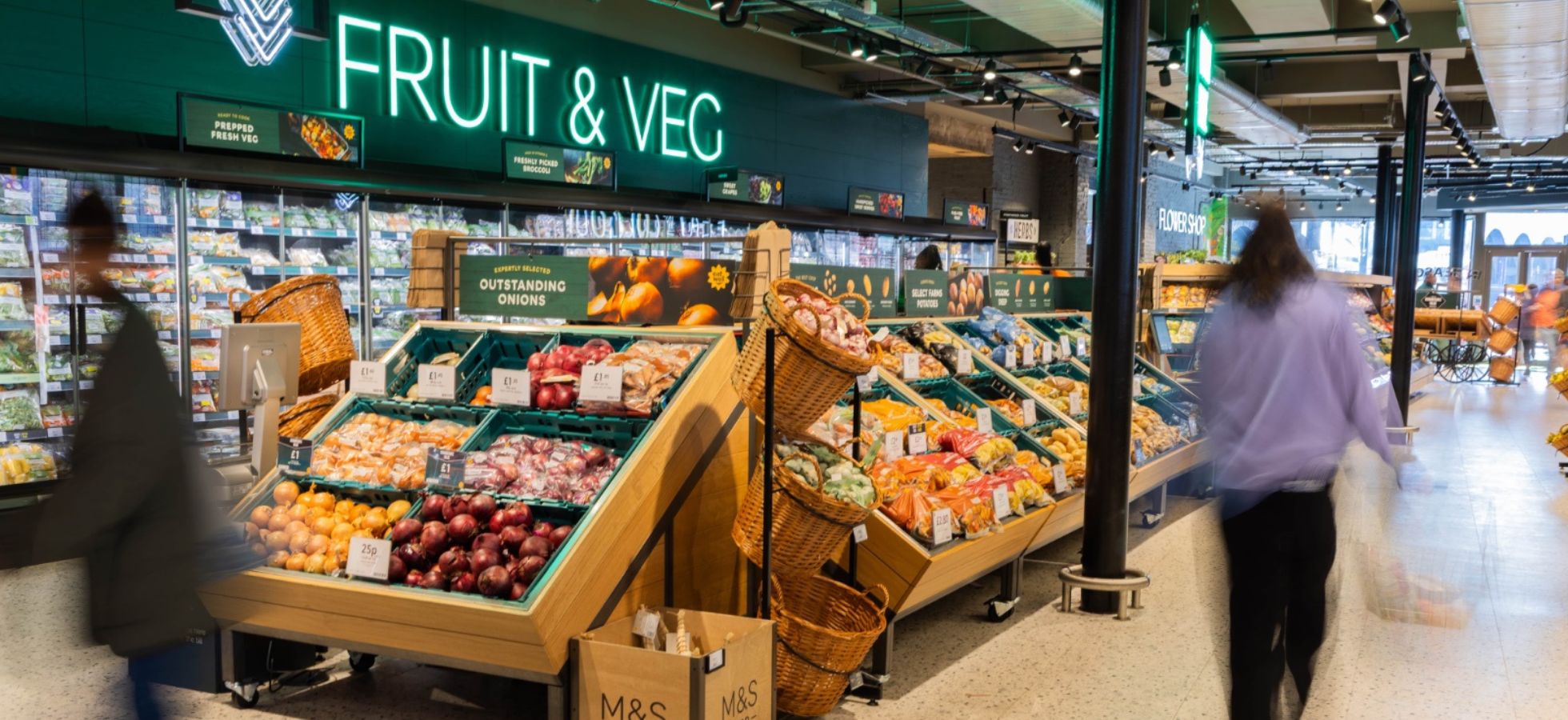
Increasing the availability of naturally fibre-rich foods will support more people to pick up products that support their daily intake, said M&S. In January, M&S launched its Nutrient Dense range, featuring 20 products that all contain a source of fibre, or another mineral or vitamin people in the UK are deficient in. Each product labels the amount of fibre on pack, to support customers to reach their daily requirement. It has also extended its range of fibre-rich ingredients across its deli range, adding chickpeas and beans to more products.
Grace Ricotti, head of nutrition at M&S, commented: “There is clear evidence linking fibre to improved health outcomes, which is why we’re sharing our research and insights about Britain’s Fibre Gap, and what to do about it.
“We support collaboration between Government and industry to prioritise fibre-rich products, effective communication around fibre and its public health benefits.
“Our report includes practical steps to drive fibre consumption including clearer labelling on pack, fibre-enrichment of products like bread and more flexibility for retailers to make fibre claims so that it’s easy for customers to see which products are high in fibre.”
Elaine Hindal, chief executive of the British Nutrition Foundation, stated: “The low fibre intakes that we see in the UK population reflect poor dietary patterns with a lack of fruit and vegetables, wholegrains, pulses and other plant foods. Evidence shows that low fibre diets increase the risk of diet-related disease including heart disease, type 2 diabetes and bowel cancer and so increasing fibre intakes is vital to improve population health.
“We welcome this new report, encouraging industry to take action to support consumers in bridging the fibre gap and making fibre-rich choices easier and more appealing.”