

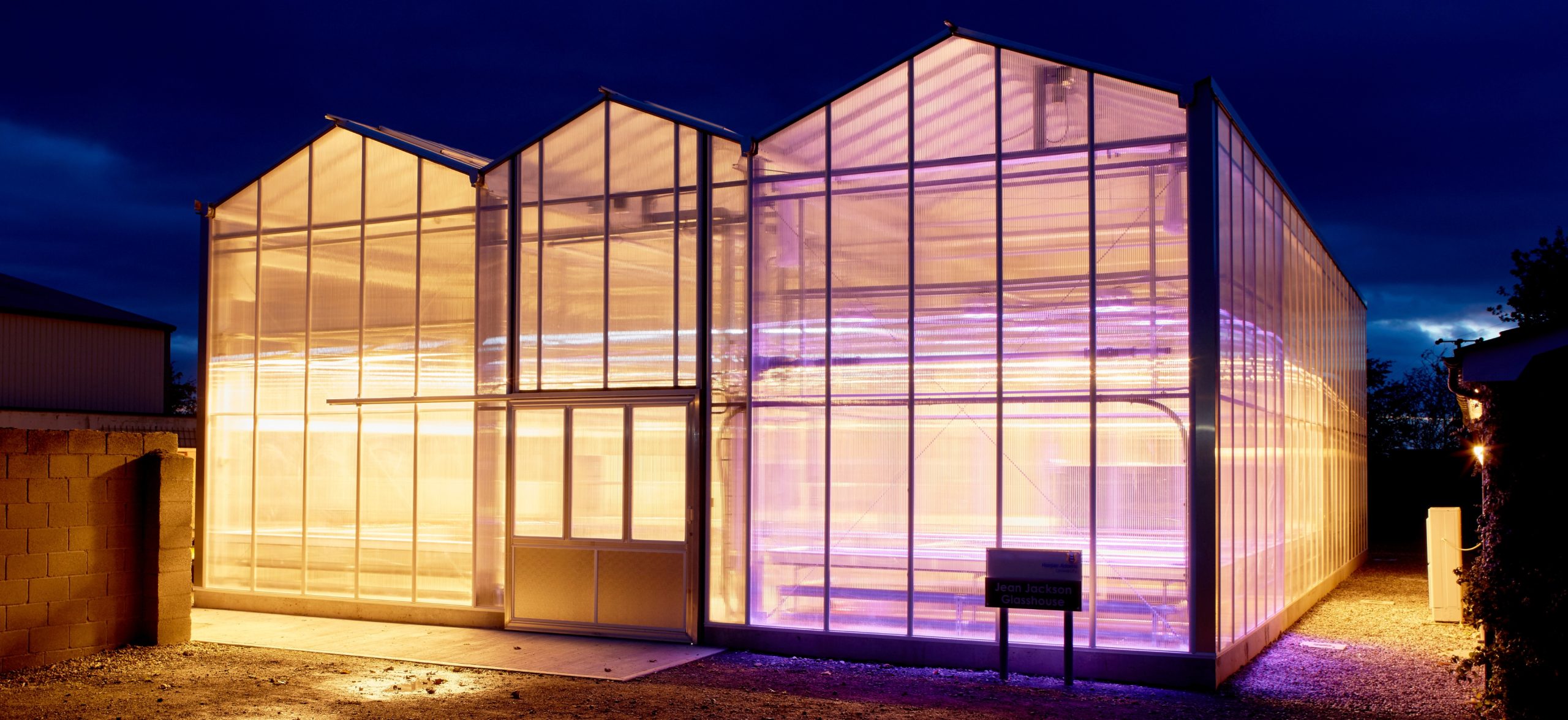
Research funded by the UK Government’s Department for Environment, Food and Rural Affairs (Defra) has examined Controlled Environment Agriculture (CEA), aiming to identify growers’ priorities regarding technology.
CEA refers to the production of crops, usually fruit and vegetables, in glasshouses and completely enclosed ‘vertical farming’ systems.
Harper Adams University (HAU) stated that the research had helped to discover “optimism over the opportunities” that technology within the crop production industry can provide.
It went on to say that in the UK, around £421 million worth of vegetables and £52 million of fruit crops were produced in controlled environments in 2024. CEA reportedly allows the production of crops in areas with “unfavourable” climate conditions and allows production seasons to be extended, reducing reliance on crop imports.
The research stated that growers are “ideally placed” to take advantage of developments in technology that allow more precise control of growing conditions and so provide higher crop yield and quality.
However, it said that despite an increase in research interest in the sector, there is little data available on whether the focus of this research aligns with the needs of its producers and what the drivers and barriers are for technology adoption in the sector.
The work funded at Harper Adams University set out to establish the global focus of CEA technology research and cross-reference this to the needs of UK growers.
A research team drawn from a range of academics and postdoctoral researchers aimed to examine scientific literature and work out the categories of research in CEA technology that were most popular. Among the areas this work identified were modelling and simulation research, as well as papers and other works examining energy, lighting and nutrient application.
“This study has highlighted areas of CEA technology research that require increased attention and brings to light the opportunities and challenges growers face.”
Senior lecturer in crop production and agronomy Dr Andrew Beacham, who was one of the eight-strong team who conducted the research, commented: “Using standardised interviews with UK CEA growers and technology providers, the wider team were able to identify a degree of overlap between research focus and industry requirements.
“However, some grower priorities, including nutrition and robotics, were found to be under-represented in the research literature and warrant increased funding focus.”

Professor of crop science Jim Monaghan said: “This study has highlighted areas of CEA technology research that require increased attention and brings to light the opportunities and challenges growers face.”
Reader Dr Iona Huang added: “Interviews showed that UK growers remain optimistic regarding the opportunities technology such as alternative energy sources and automation can offer the sector, including reduced costs, improved efficiency and crop quality, extended supply season and mitigation of import risk.
“This must, however, be balanced with threats – including operational and capital costs, which are viewed as the most significant barriers to technology innovation uptake.