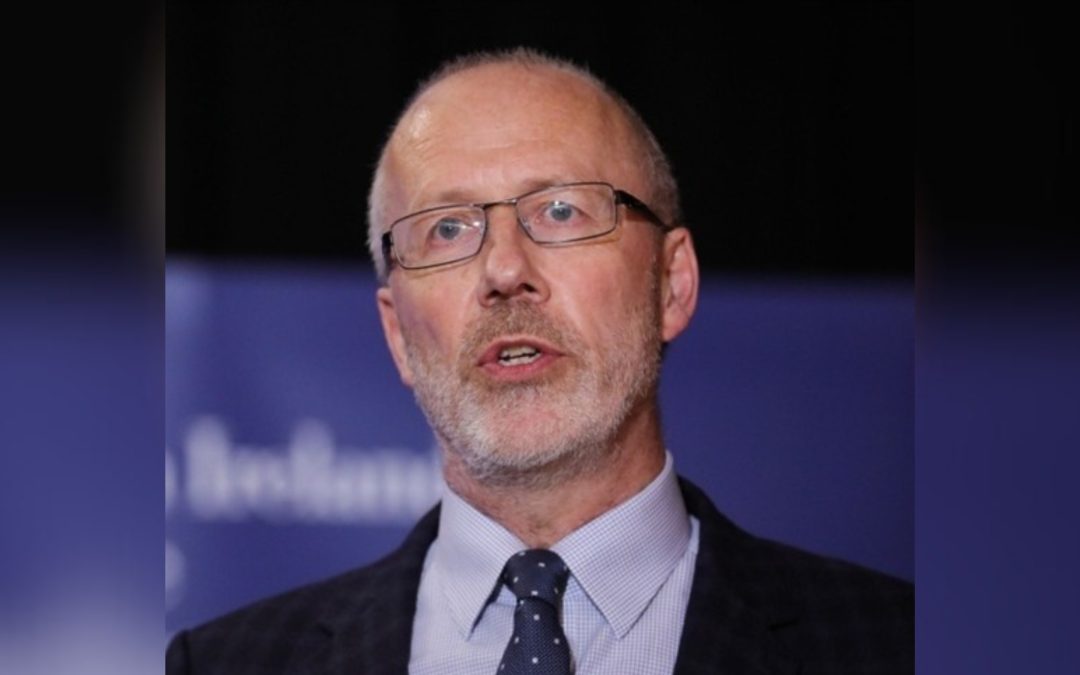
During a board meeting, the Food Standards Agency (FSA) appointed Professor Ian Young as its Chief Scientific Advisor (CSA) in a part-time capacity.
While taking on the new role, Young will maintain his current role of Consultant Chemical Pathologist at Belfast Health and Social Care Trust and Professor of Medicine at Queen’s University in Belfast, where he previously directed the Centre for Public Health.
He currently serves as Chief Scientific Advisor to the Department of Health, Northern Ireland, Director of Research for Health and Social Care, Northern Ireland and chairs the UK Government’s Scientific Advisory Committee on Nutrition. He will step down from these positions upon joining the FSA.
Throughout his career, Professor Young has held leadership positions in scientific organisations, including past-president of the Association for Clinical Biochemistry and Laboratory Medicine, UK. He previously chaired both the Joint Committee for Traceability in Laboratory Medicine and the Scientific Division of the International Federation of Clinical Chemistry and Laboratory Medicine.
Susan Jebb, Chair of the FSA, commented: “I am very pleased to welcome Professor Ian Young to the FSA as our new Chief Scientific Advisor. This role is essential in sourcing evidence and providing assurance to the Board in the quality of the science that we rely on to guide our work and develop FSA policies.
“He will also help to ensure that FSA maintains its strong connections with the science community in academia, industry and Government. Professor Young’s deep expertise and ability to translate research into policy will be invaluable in our mission of food you can trust, and I look forward to working with him.”
Professor Young stated: “I am delighted to have been offered the position of Chief Scientific Advisor with the FSA. There is nothing more important for the health of the public than ensuring that the food we eat is safe and authentic. I look forward to working with scientists across the FSA to ensure that everything we do is led by good science and the best evidence available.”
Professor Young will become the fourth FSA CSA, taking over from Professor Robin May, who left FSA in September 2025 following his appointment as Interim Chief Scientific Officer at the UK Health Security Agency (UKHSA).
FSA agrees to abattoir discount system consultation
The FSA board has also agreed to a public consultation in 2026 on proposals for a revised discount system for abattoirs.
In its meeting on Wednesday 10th December, FSA said this would offer more targeted financial support to smaller abattoirs.
Official Vets and Meat Hygiene Inspectors check that food safety and animal welfare standards in abattoirs are met, and the FSA recovers costs of this regulation from operators. Currently all abattoirs, including the largest, receive some discount on these charges.
The system has not been reviewed since 2015. Following a Call for Evidence last year and stakeholder engagement, the FSA board considered proposals to ensure the scheme ”remains value for money and is targeted where it will bring most benefit”.
The board has agreed to a public consultation on proposals for a more targeted system of support, focused on smaller abattoirs. FSA said they can support farmers who specialise in rarer breeds and give the public the option to buy local, and the revised model has been developed with this in mind.
The smallest abattoirs – those processing up to 1,000 LSU (Livestock Units) per year for red meat, or 150,000 birds annually for poultry – would receive maximum support, said FSA, with a 90% discount on charges.
Some medium-sized abattoirs would receive support determined according to a decreasing taper to help minimise barriers to growth and equalise regulatory burdens. In a move away from the current system, the largest businesses would not receive support under the proposals.
The FSA board agreed to move forward to a public consultation on the proposed approach. The consultation is expected to be launched in Spring 2026, with the FSA board considering final proposals later in the year. The final decision rests with Ministers, advised by the FSA.
Professor Susan Jebb, FSA Chair, commented: “As a public body, the FSA must ensure that any financial support to industry is kept under review and remains value for money.
“We’ve listened carefully to feedback from interested parties and recognise the important role that smaller abattoirs can play in supporting local farming, the rural economy, and giving people greater choice when purchasing meat.
“The board decision means we will now move forward with a formal public consultation on how the proposed future support model would work. This will give businesses and the public the opportunity to help shape the final proposals we will put to Ministers that aim to uphold essential food safety regulation while supporting the sustainability and growth of smaller abattoirs.
“We’re working closely with Defra, Welsh Government and DAERA to ensure any future support helps deliver real public benefits while maintaining the rigorous safety and animal welfare standards the public expects.”