

According to reports, Government has looked at the potential impact on the food industry if the Strait of Hormuz remains closed.
The closure of the Strait of Hormuz as a result of the conflict in Iran has caused significant disruption to transport of gas and oil, leading to increased fuel and fertiliser costs.
Responding to reports that Government is planning for potential food shortages caused by the gas and oil transport disruption, Business Secretary Jonathan Reynolds commented: “I want to reassure people that we have been acting since the very start of this conflict. In fact, I’ve been acting when it comes to CO2 since way before the conflict.
“In fact, in the first week that I was in this job of Business Secretary back in September, I decided to mothball a company called Ensus in the North East. It was facing bankruptcy and I decided to mothball it and not allow it to go bust. That’s because the by-product of the bioethanol that it produces is CO2.”
“And I made the decision even back then, before there was any issues in the Middle East of this nature, that I wanted to keep the resilience available to us on what I perceived as a really important component as part of our economy. And then in the first couple of days of the conflict erupting in the Middle East, I un-mothballed it, and I can tell you that it’s now back up to full operation producing CO2.”
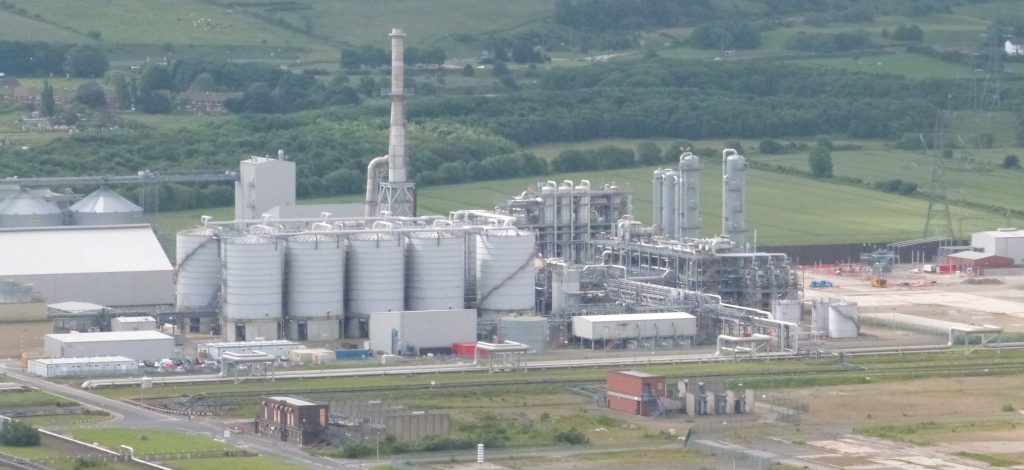
The Ensus UK bioethanol plant in Teesside will operate for a three-month period as part of Government’s plan to “bolster domestic CO2 production significantly”, as the conflict in the Middle East has reduced the reliability of CO2 imports, which food producers rely on.
A Government spokesperson commented: “We took decisive action last month to shore up the UK’s critical supplies of CO2 by temporarily restarting the Ensus bioethanol plant in Teesside and are continuing to work closely with business groups to tackle the impacts of events in the Middle East. Reasonable Worst Case Scenarios are a planning tool used by experts and are not a prediction of future events.”
“Retailers are experienced in managing supply chain disruption, and there is no suggestion of any risk to food availability for consumers.”
Andrew Opie, director of food and sustainability at the British Retail Consortium (BRC), said: “We would expect Government to be contingency planning for all scenarios, and this type of exercise is a normal part of ensuring the UK’s resilience to external events. Retailers are experienced in managing supply chain disruption, and there is no suggestion of any risk to food availability for consumers.
“However, the situation in the Middle East continues to add inflationary pressures at a time when retailers already face significant new costs from domestic policies. Government should consider what domestic policy levers it can use to reduce these costs, particularly those non-commodity charges that push up the cost of businesses’ energy bills.”
Responding to reports of Government contingency planning, a spokesperson for the Department for Environment, Food and Rural Affairs (Defra) stated: “The UK has a resilient food system. At present, we do not expect any impact on food availability for consumers, and we do not expect any short-term disruption. We will continue to monitor the situation and take all necessary steps to maintain supplies.”
Tesco welcomes food shortage planning
Tesco chief executive Ken Murphy said the Government was “doing the right thing” in planning for the food shortages in the UK. He told reporters during a press call: “We are in constant contact with the Government for their scenario planning and we completely support their efforts.
“At this time, we haven’t seen any issues and are in very strong shape. We constantly talk to our suppliers and none of our suppliers have raised any issues.”