
The authoritative independent voice of the UK food industry

The authoritative independent voice of the UK food industry

News

Nitrogen freeze drying for bacteria allows process testing before investing

7 Nov, 2019

GEA has launched its new nitrogen freezing pilot plant for bacteria, giving food and dairy processors the opportunity to trial this new technology in their own plants before investing in production-scale equipment. Dairy, food and probiotic product processors use live bacteria as part of the production process. Traditionally, they have kept their own strains of […]

Interested in reaching the food industry?

Explore our media pack for all of our advertising opportunities and partnership options.

GEA has launched its new nitrogen freezing pilot plant for bacteria, giving food and dairy processors the opportunity to trial this new technology in their own plants before investing in production-scale equipment.

Dairy, food and probiotic product processors use live bacteria as part of the production process. Traditionally, they have kept their own strains of bacteria and transferred them from one batch to the next. However, as more specialized strains of bacteria have emerged, so too the need to distribute them more widely. This is typically done by freezing them to -50 Celsius and then storing under temperature-controlled conditions until they are required. This requires a continuous cold chain, which is difficult in less developed countries.

“We are absolutely committed to this technology and want our customers to have the opportunity of trying it out for themselves in their own factories…”

Freeze-dried bacteria have become popular because it can be transported and stored at ambient temperature and rehydrated. Freeze drying bacteria is along process requiring several hours to freeze, then an additional 48 to 72 hours for the freeze drying process to be completed; this ties up expensive freeze-drying equipment and limits production.

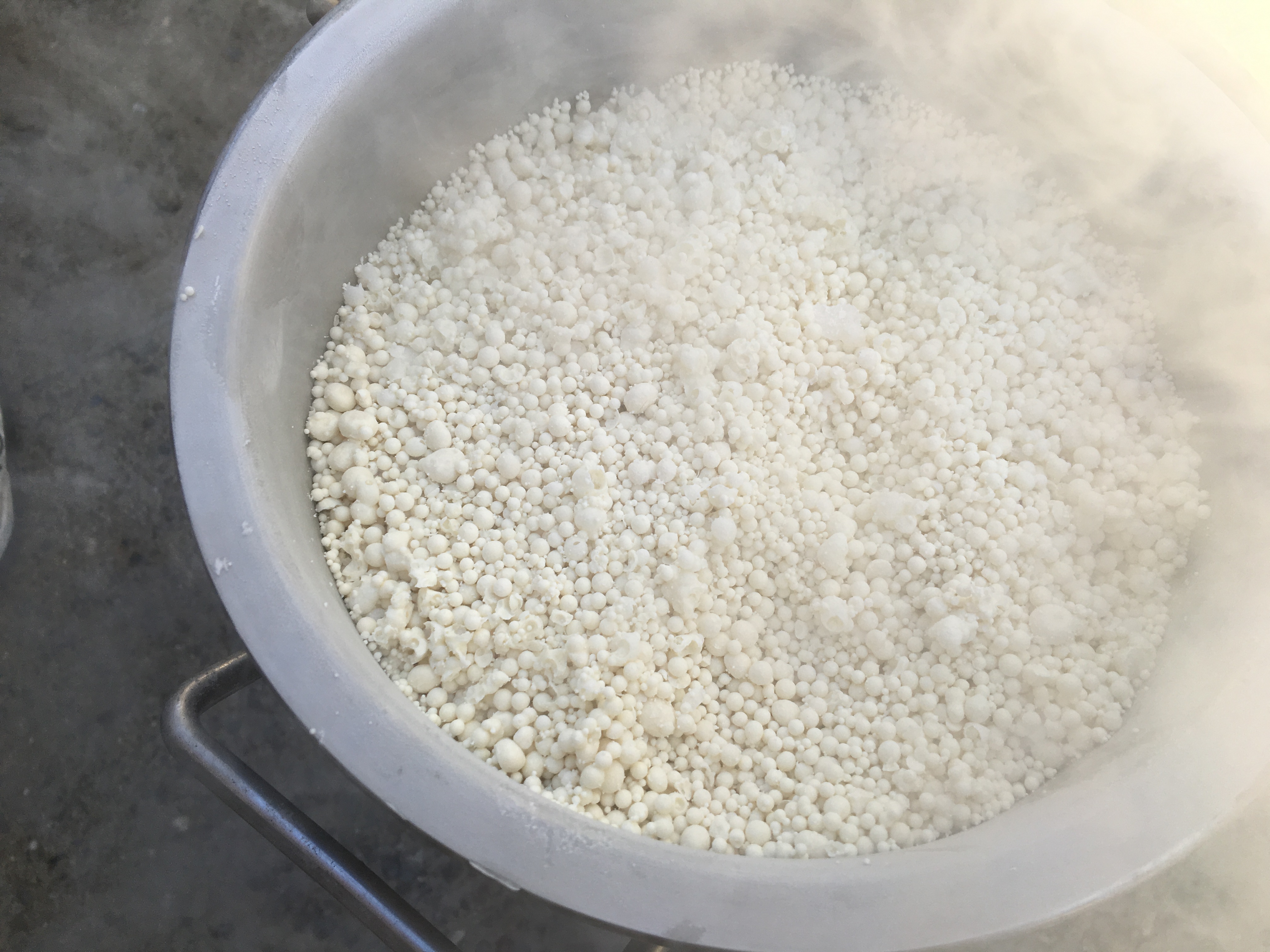
The new pilot plant from GEA freezes the bacteria into droplets using a liquid nitrogen bath outside the freeze dryer then drying the pellets via the normal procedure. GEA state that this process means:

  • Rather than freezing all of the bacteria is a single batch, it can be collected from a continuous stream improving flexibility and equipment utilisation.
  • Fermentation and freeze drying are separate so the freeze dryer does not need to be available when the product is frozen.
  • Bacteria can be stored at -50 C until it is required.
  • The bacteria cell count resulting from this process is nearly double that of traditional freeze drying techniques.
  • Frozen pellets dry much quicker than bacteria in slab form taking 24 to 36 and not up to 72.

Morton Pedersen, area sales manager for GEA Process Engineering said: “Although there is a cost for the liquid nitrogen, this is more than offset by the optimized utilization of the freeze dryer. Freeze dryers are expensive so we need to make sure customers are getting the best possible output from them.”

“We are absolutely committed to this technology and want our customers to have the opportunity of trying it out for themselves in their own factories, the results already seen with this new pilot plant are impressive and we’re confident that our customers will also be delighted with the results.”

 

Latest News

Greencore finds Q3 trading “strong”

Convenience food manufacturer Greencore Group Plc has issued a trading update for the 13 weeks ended 26th June 2026, reporting volume growth ahead of the market.

Celebrating inspirational women in the meat industry.

Voting is now open for the 2026 Women in Meat Industry Awards. Click here to vote now!

Everything you need to know about the Food Management Industry Awards can be found through our dedicated website.

Some of the leading companies that have participated in the Food Management Today Industry Awards...

The end of volume-led growth?

The end of volume-led growth?

Research in IGD’s latest UK Away From Home forecast suggests a shift away from traditional market behaviour, says senior insight analyst Shannon Goldsmith.

The end of volume-led growth?

Research in IGD’s latest UK Away From Home forecast suggests a shift away from traditional market behaviour, says senior insight analyst Shannon Goldsmith.

Healthy diets need practical, accessible solutions. Frozen food is ready to deliver.

Rupert Ashby, chief executive of the British Frozen Food Federation (BFFF), explains why frozen food will play a key role in helping people across the UK eat a healthier diet.

Supporting seafood careers through skills and training 

Seafish onshore training advisor, Richard Wardell, outlines some of the training opportunities available through the organisation for workers in the onshore sectors of the seafood industry.

Cheese shredding solutions by Urschel

Leading cheese processors rely on optimised dicing and shredding solutions supplied by Urschel.

The Multivac Total Offer: end-to-end lifecycle support

Streamline your operations with a joined-up approach to equipment, materials and service solutions from Multivac.

Revolutionise your sterilisation: how the Static Steriflow solves real production challenges

Interfood Technology talks to Food Management Today about the Static Steriflow, engineered for versatility and reliability in food production environments.

Sign-up for our newsletter and alerts

"*" indicates required fields

Name*

Which emails would you like to receive from us?

Please select an option*
* By subscribing or opting in to any communication you also give permission for us to send you occasional general information updates about this media portfolio. You can opt out or change your preferences at any time.