
Recent months have seen a series of breaking news stories highlighting the precarious position of the UK’s food supply chain.
The latest warning comes from the global commodities market. In September, the UN Food and Agriculture Organization’s Food Price Index reached its highest level since November 2022, with cereal and sugar prices among the factors pushing the index higher. Wheat prices have also been under pressure, while concerns around weather and the prospect of a strong El Niño are adding another layer of uncertainty to global agricultural production.
Domestically, the National Audit Office has warned that the UK’s food supply chain has not been adequately tested against severe disruption. It published an assessment in September pointing to risks ranging from extreme weather and energy disruption to disease outbreaks and geopolitical events.
These warnings raise a big question for everyone involved in food: how well prepared are we to face the increasingly likely prospect of severe supply chain disruption?
Britain’s exposure to global food markets
The UK has a remarkably diverse food supply chain, supported by domestic agriculture and a huge network of international trading relationships.
In many ways, that diversity is a strength. International trade gives British consumers access to products that cannot be produced here in sufficient quantities throughout the year, while allowing businesses to source from different regions as conditions change. It is an essential part of how the food system works.
However, it also means that Britain’s food supply is highly exposed to geopolitical, economic and climatic volatility, and difficulties can arise when supplies are disrupted across several markets at once.
The speed at which geopolitical events can affect food supplies and commodity markets was exposed by Russia’s invasion of Ukraine and provided a stark example of how events thousands of miles away can have consequences for British businesses and consumers.
Climate volatility adds further risk. The prospect of the current powerful El Niño event is resulting in weather disruption across important agricultural producing regions. The UK Government has highlighted possible impacts on global food supply chains, including lower yields and higher prices for some commodities. Following the record summer heat here in the UK, we have already seen a significant reduction in yields and crop loss from cereals to fruit, vegetables and potatoes.
For businesses buying ingredients and food products, the risks are real – when normal operations are disrupted the impacts on availability, lead times, prices and whether alternatives source can be found quickly enough can be significant.
This is why the way we store food is critical.
Creating some breathing space
Fresh food supply chains have been developed around speed. Food is produced, harvested, transported, distributed and sold within relatively short periods of time.
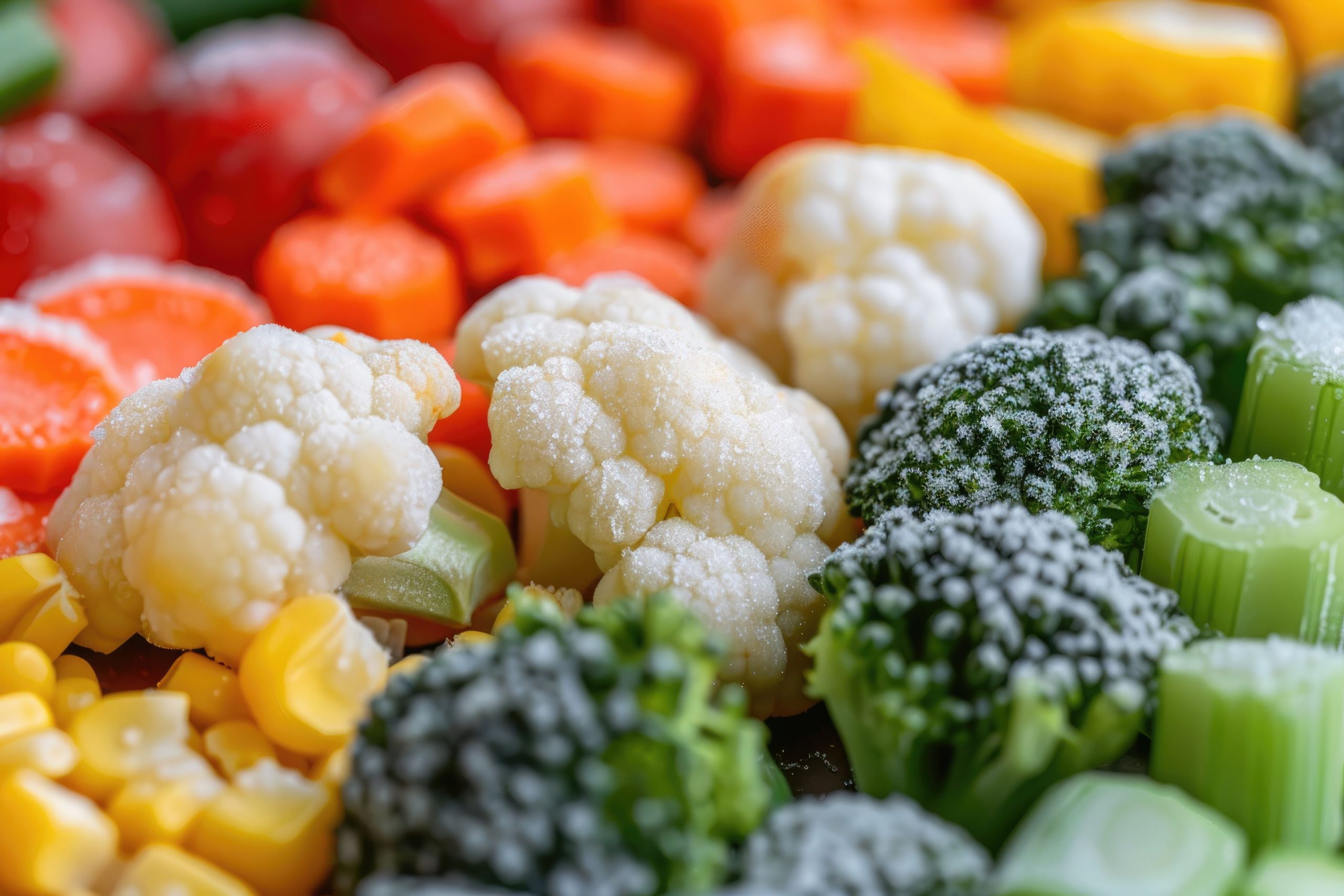
With frozen food, once the produce has been harvested and frozen, speed is much less of a critical concern. Freezing allows food to be preserved close to the point of production and held safely for much longer, and this can be crucial when supply chains are under pressure.
For a food manufacturer, retailer or foodservice operator, having the option to source frozen products can provide greater flexibility around procurement and stock management. It can help businesses manage seasonal availability and gives them another option when fresh supply is disrupted or becomes more difficult to secure.
If an extreme weather event affects a crop, if a transport route is temporarily closed or if production in a particular region falls sharply, food that has already been frozen and safely stored can remain available while other supplies are found.
Resilience and food waste
The UK Government estimates that approximately 10.7 million tonnes of food is wasted every year in the UK, equivalent to around a quarter of all food purchased. Globally, the figure is a staggering 1.05 billion tonnes. That’s 170 times the weight of the Great Pyramid of Giza, and equivalent to around 19% of food available to consumers.
Every tonne of food wasted represents resources that have already been used – land, water, energy, labour, packaging, transport and refrigeration. When agricultural production is facing greater uncertainty, getting as much value as possible from what we produce is increasingly important.
The more effectively we use the food that is produced, the less pressure we place on the resources required to produce additional food.
Cold storage deserves a place in the resilience conversation
All of this points towards a broader issue that deserves more attention – cold storage.
When we talk about national resilience, we naturally think about energy, water, fuel, transport and communications. However, food is just as fundamental to the functioning of society, and the infrastructure that allows it to be stored and distributed should be considered in the same context.
The National Audit Office has identified food as one of the UK’s Critical National Infrastructure sectors. That should encourage a serious conversation about the capacity and resilience of the infrastructure underpinning the food chain.
Do we have enough cold-storage capacity? Is it located in the right places? How quickly could businesses respond if a major supply route were disrupted? Are emergency plans being tested with the companies that actually produce, store and distribute food?
These questions are particularly relevant at a time when the industry is already dealing with higher costs and uncertainty.
There is no single solution to food resilience, and it depends on having a range of options available in each situation.
For individual businesses, resilience can be increased through relatively straightforward decisions. Having a broader range of suppliers, considering different formats of product and understanding where frozen can provide additional flexibility can all help reduce exposure to a single point of failure.
Preparing before the next shock
Britain cannot control the weather in major food-producing regions. We cannot determine what happens to international trade routes or prevent geopolitical events from disrupting markets.
But we can decide how well prepared our food system is when those things happen.
That means supporting domestic production, maintaining diverse international supply chains and investing in the infrastructure needed to move and store food efficiently. It also means recognising the contribution that frozen food can make to the overall picture.
For businesses across the food industry, the choice between fresh and frozen will always depend on the product, the customer, the application and a host of commercial considerations. Frozen gives businesses another tool to use when availability, seasonality, price or supply security become important considerations.
At a time when uncertainty is becoming a more permanent feature of the food system, having that option matters.
As the latest global food price figures and the National Audit Office’s warning remind us, we cannot predict the next disruption. Building resilience now gives Britain a better chance of having time to respond when it arrives.

The British Frozen Food Federation (BFFF) is the trade association for the UK frozen food industry. It represents members from across the whole frozen food supply chain.
Rupert Ashby is CEO of the BFFF, a post he has held since 2022. He ran several Co-operative Group (CWS Agriculture) farming businesses before moving to the group’s Manchester headquarters as a marketing project manager. His farming experience included growing vining peas, broccoli, cauliflowers and chipping potatoes for the frozen food industry.
Ashby then joined the Country Land and Business Association (CLA) before taking on a role in London, where he led the Regional and Membership teams, and has held a role as a board member of the CLA Game Fair.