

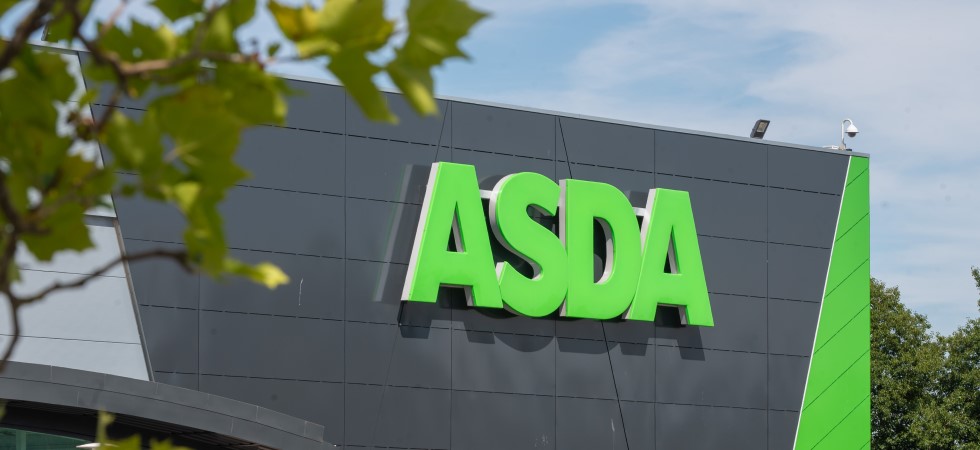
UK retailer Asda has found that while most households saw an improvement in disposable income in January, under-30s and those on the lowest incomes are being left behind.
Asda has released its latest Income Tracker, which reveals that for most households there was a modest improvement in disposable income in January 2026. However, it said that the lowest earners and under-30s remain worse off than a year ago.
The Income Tracker rose by £4.24 per week year-on-year in January 2026, according to the supermarket, with the average household having £261 per week to spend after living costs. Both the under-30s and those aged 30-49 recorded an annual contraction.
The report, produced with the Centre for Economics and Business Research (Cebr), stated that price growth continued to be “moderate” in January, following a brief pick-up in December, with headline inflation falling 0.4 percentage points to 3.0%. Food inflation was a “key downward contributor” this month, with annual price growth slowing by 0.9 percentage points to 3.5%.
Food and non-alcoholic beverage inflation slowed to 3.6% from December’s 4.5%, driven by significant easing in price growth for breads and cereals, and meat. On a monthly basis, food prices fell by 0.1% compared to December, which was “a welcome change for struggling UK households”, according to the report.
The report went on to say that the lowest 20% of earners were “disproportionately exposed to elevated inflation over 2025” in key categories such as food and utilities, which make up a far higher proportion of their income. As such, they are estimated to be £1.91 per week worse off compared to January 2025.
“Nominal discretionary incomes have seen modest year-on-year growth, driven primarily by slowing inflation, as gross income growth has continued to slow.”
Sam Miely, head of forecasting and thought leadership at Cebr, commented: “The Asda Income Tracker looks to have started 2026 in a similar fashion to how it ended 2025. Nominal discretionary incomes have seen modest year-on-year growth, driven primarily by slowing inflation, as gross income growth has continued to slow.
“Considerable scarring remains from the double-digit inflation of the cost-of-living crisis, particularly for those on the lower end of the income distribution, for whom purchasing power is yet to fully recover.”