
The British livestock sector finds itself at a crossroads. Although consumer demand for our high-quality, sustainable red meat has never been stronger, the farmers who produce it are facing a perfect storm of rising costs of fuel and fertiliser, disease outbreaks and regulatory uncertainty that threatens the very future of our beef and sheep farms.
The question we are all asking ourselves is, how do we instil confidence, reverse the current trend of declining livestock numbers and push for growth in our sector? For me, it must be about enabling sensible policy making, continuing to grow our market opportunities and supply-chain fairness.
Farmers’ confidence is at a low ebb
On livestock farms across the country, including my own in the Cotswolds, farmers are again facing increasingly significant inflationary pressures, driven by the energy crisis and war in the Middle East. Fertiliser and fuel prices are spiralling upwards and our ability to produce the forage needed for our animals and running farm machinery is becoming very expensive.
When you combine this with the extreme weather we’ve experienced over the past 18 months, the accelerated reduction of delinked support payments and changes to inheritance tax, it is no surprise that confidence in the sector remains severely low.
Consumers want to buy British
Despite this, it is comforting to know that the public continues to back British farming and truly values the beef and lamb we proudly produce to some of the highest welfare and environmental standards in the world. We know that 86% of British consumers want to buy more British food, and 89% say British farms should grow as much food as possible to support national food security.
Retailers can support us by clearly signposting the origin of produce on shelves, including high-quality British produce, to help shoppers make informed choices about the food available to them in the limited time they have in store. These include promoting and arranging products by country of origin, clear on-pack labelling and the accurate use of flags such as the Union Jack.
Assessing the impacts of new legislation
Several issues coming down the track that we’re keeping a close eye on are increased regulatory burden through environmental permitting, mandating animal health pathway visits and Government proposals to reform the rules for castrating and tail docking lambs.
While we all want to enhance animal welfare, the current proposals risk being detrimental if implemented without suitable, licensed pain-relief products. We cannot use tools that do not exist, and we must avoid introducing legislation that makes us less competitive against imports potentially produced to lower standards. The plans as they stand risk damaging the productivity, competitiveness, and life-time welfare of livestock in the UK.
Meanwhile, as set out in the recently published Water White Paper and the Environmental Improvement Plan 2025, Defra has proposed extending Environmental Permitting Regulations (EPR) to the ‘intensive beef’ and dairy sectors. While air and water quality is extremely important to the beef sector, the NFU believes that any form of EPR on beef producers would significantly hinder growth and further diminish confidence in the sector.
We are currently surveying our members to collate evidence that will strengthen our response to the upcoming consultation and are convening an industry roundtable at the beginning of May to establish a plan for an alternative industry-led solution to air and water quality challenges.
On a more positive note, we welcomed news earlier this year that legislation to mandate sheep carcase classification and price reporting had come into force. This regulation for the sheep sector has been a long time coming, the NFU had been lobbying for more than a decade, and it’s a huge positive for sheep farmers up and down the country. The move will bring much-needed transparency and fairness to the sector, benefitting farmers, processors and customers across the wider supply chain. The Rural Payment Agency’s (RPA) role in licensing and auditing will be vital for the scheme’s success.
Meanwhile, the Government reversed its decision and decided to extend the visa concession for highly skilled shearers from New Zealand and Australia for the 2026 season. This was more good news, as with too few UK-based shearers, we continue to need these highly skilled shearers to help the sector clip the UK flock. We are calling on the Government to provide urgent clarity on the future of this visa concession.
The decade ahead
The NFU’s Livestock Board, which I am very fortunate to chair, has a clear vision for the next decade – one that brings certainty and allows us to start investing in our businesses and builds confidence to see cattle and sheep numbers grow. We have the domestic processing capacity and a world-class product that is in demand, so we must take these opportunities.
We just need the right support from Government and the entire supply chain and fair treatment in the marketplace to match it, and, crucially, policies that will help establish a resilient, sustainable and thriving UK livestock sector.

The National Farmers’ Union (NFU) represents 43,000 farming and growing businesses across England and Wales. Its purpose is to champion British agriculture and horticulture, to campaign for a stable and sustainable future for British farmers and to secure the best possible deal for our members.
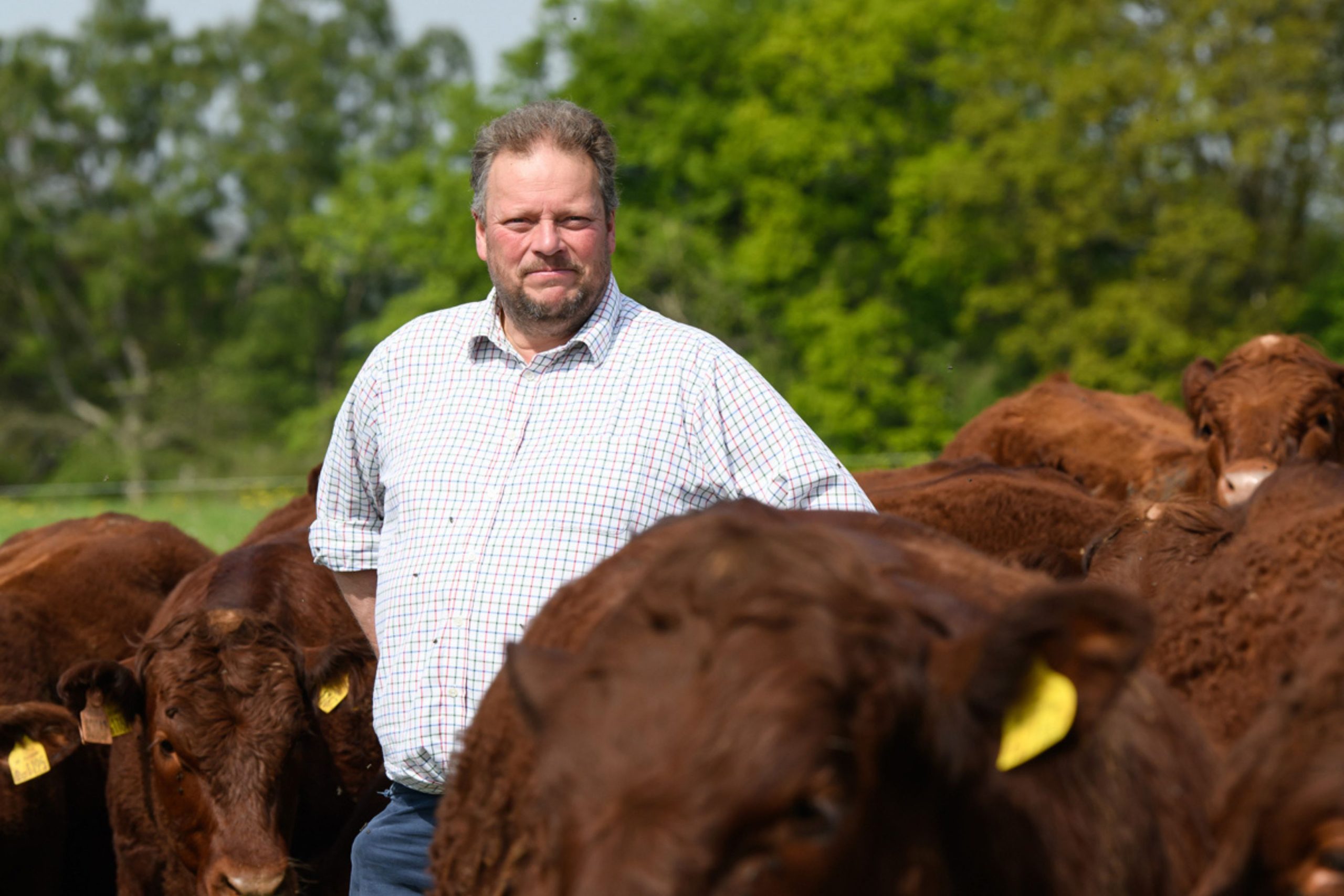
David Barton is chair of the NFU Livestock Board. He was born and raised on his family farm near Cirencester in the Cotswolds where he farms a beef suckler herd. The farm has been in his family for five generations. He also has a very small flock of pedigree poll Dorset sheep.