

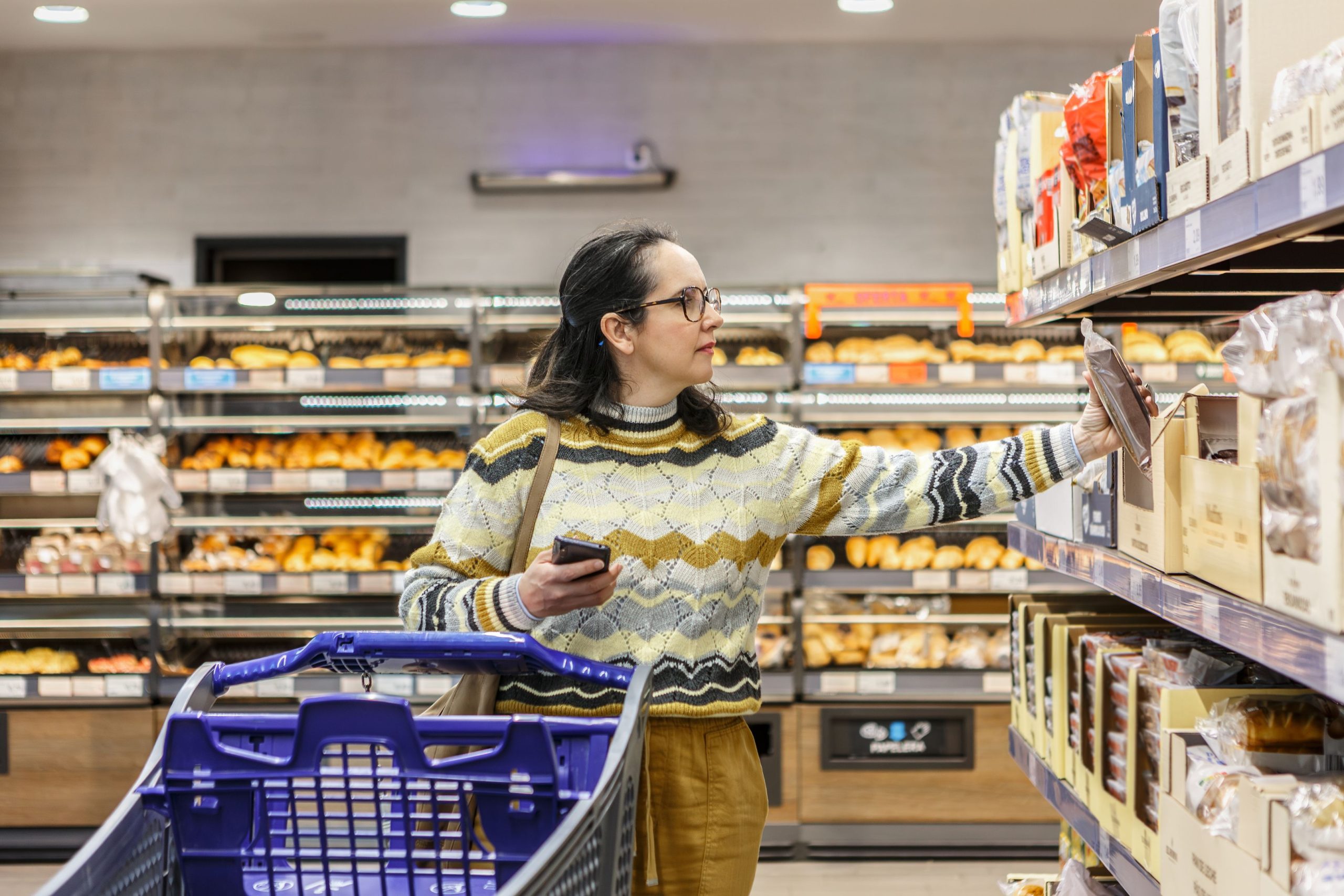
Health has become one of the defining forces shaping food and grocery retail today. However, while it opens significant commercial opportunities for manufacturers and retailers, the diverse and rapidly shifting nature of shopper needs also creates a complex business challenge: understanding who to engage and how to influence them.
Helping businesses navigate this complex landscape is IGD’s new ShopperVista report, ‘Health: segmenting shopper attitudes’. It identifies five distinct health personas and reveals the motivations, barriers, and decision-making styles influencing how shoppers navigate retail today.
These personas provide a clearer framework for designing products, ranges, and communication strategies to target shoppers more effectively. They also highlight why broad approaches to health are becoming less effective as consumer needs fragment.
The market demands precision
IGD’s segmentation research involved surveying more than 2,000 UK shoppers, supported by accompanied shops in Tesco, M&S, and Waitrose. The findings reveal a sharp divide in levels of health engagement.
At one end of the spectrum is the ‘Peak Performer’, representing just 10% of the population and fully engaged across physical, mental, dietary and lifestyle factors. At the other end is the disengaged ‘Bystander’, making up 25% of shoppers and often missing cues that signal whether products are healthier.
‘Moderators’, ‘Jugglers’ and ‘Monitors’ sit between these extremes and want to make healthier choices but struggle due to time pressures, household demands or confidence barriers.
This confirms a key commercial reality: health is not ‘one size fits all’; it is a spectrum. Manufacturers and retailers need more nuanced approaches that recognise the constraints and motivations of each group.
The five personas
- Peak Performers
Highly engaged and informed, ‘Peak Performers’ are strong adopters of functional products, detailed claims, and innovative ranges. They are the natural target for premium health propositions. - Moderators
‘Moderators’ focus on balance. They want products that support healthier habits without removing enjoyment or adding complexity. This group is well suited to mainstream product development. - Jugglers
The ‘Jugglers’ are defined by time pressure and household demands – they tend to engage with health when it fits easily into their routines. Their adoption of a trend often signals when it is set to become more mainstream. - Monitors
‘Monitors’ understand health but do not always act on their knowledge. They need simple, trustworthy information that reduces the effort required to make healthier choices. - Bystanders
As the least engaged, ‘Bystanders’ mainly respond to clear and obvious visual cues and uncomplicated messages. But the cues may still pass them by because they are less able to identify which products are healthier.
Together, these personas highlight the opportunity for tiered product strategies that reflect the diversity of real-world decision-making.
Category shifts signal changing priorities
Our research shows clear movements in category behaviour when shoppers try to improve their health. Categories with strong natural health cues see the biggest gains. These include pulses, lentils and beans, which increase by 25%, fresh fish and seafood, which increase by 22%, and soup, which increases by 21%.
Categories seen as less healthy experience the sharpest declines. Biscuits fall by 45%, ready meals by 38%, and alcohol by 34%.
These shifts demonstrate that natural cues remain powerful motivators. Even shoppers who are only moderately engaged respond positively when health signals are simple, familiar and easy to understand.
The cues shoppers rely on most
We found three cues that shoppers find most useful when assessing whether a product is healthy: traffic light labels (36%), five-a-day messaging (34%) and familiarity with the product (34%). Technical claims, such as protein content, are viewed as least useful (16%).
This has clear implications for manufacturers. Shoppers rely on clarity and simplicity more than detailed nutritional information, and product design must reflect this by using signposting that aligns with how shoppers actually process information in store.
Designing products to support real behaviour
There are several opportunities for manufacturers who want to support healthier choices while driving category growth.
First, portfolios can be layered to appeal to each persona’s needs and preferences. Ranges with advanced nutritional detail for well-informed ‘Peak Performers’, others with clear cues to reduce decision-making effort for ‘Bystanders’ and ‘Monitors’.
Second, packaging plays a significant role in reducing cognitive load. Simple, recognisable visuals and consistent framing make it easier for shoppers to identify healthier options.
Third, strengthening natural health cues across categories helps drive healthier behaviour, even in categories traditionally associated with indulgence.
Finally, our research shows that most consumers give less priority to health factors when eating out because the occasion is seen as a treat. Manufacturers supporting foodservice partners should strike a balance between health and enjoyment, while helping retailers support shoppers with healthier behaviours at home.
Collaboration is key
Retailers expect manufacturers to contribute actively to improving shopper health, and the five personas provide a clear structure for joint planning. ‘Peak Performers’ look for innovation. ‘Moderators’ and ‘Jugglers’ rely on accessible swaps. ‘Monitors’ need reassurance and consistency. ‘Bystanders’ require unmistakable signposting.
Aligning product development and merchandising with these needs helps both manufacturers and retailers support healthier choices, while also supporting stronger category performance.
For a detailed and realistic understanding of how shoppers engage with health in stores, the full ‘Health: segmenting shopper attitudes’ report is available now to subscribers of IGD’s ShopperVista insight service.
Non-subscribers can access a free 10-page preview.

IGD is a charity that offers insights and consulting services to the food sector with the aim of uniting the industry to address critical challenges across the agrifood supply chain.
Bryony Perkins is a senior insight analyst in IGD’s ShopperVista team. Focusing on future-looking insight, she analyses shopper behaviour across categories, channels, and tracking data.