

I frequently talk to leaders in the food industry and its supply chain – and these conversations always include concerns about their talent pipeline and recruitment more broadly.
Why is this happening – and what are we doing about it at Harper Adams University?
The food industry faces substantial challenges, including margin pressure and demanding legislation as well as recruitment. But universities, too, have challenges. They have financial pressures of their own, are accused of delivering “Mickey Mouse degrees”, of sending graduates into unemployment saddled with debt, of being more interested in research than good quality teaching.
Amid all of that, why are we confident at Harper Adams University of what we do and the value we provide to students and to industry? This article describes our approach to skills development, to achieving award-winning graduate employability and to diversifying our offer. But there is a single theme behind our confidence and our success – and that is our support and collaboration with industry partners
Teaching designed with and for industry
Let me deal with teaching first. Harper Adams is the only university I have worked at – so I don’t know the others! But where some university’s lecturers may prefer to concentrate on their research interests, my sense is that we have a healthy balance of industry experience and research in our team. I work with many colleagues whose first career was in industry: one came from corporate finance in agri-business, one was a nutritionist, one an NPD manager, one a project manager… the list goes on.
I came to lecturing after careers in farming and in retail, bringing with me an extensive network of people – who have since been very generous with their time sharing their expertise to help me keep my teaching up to date and relevant. Examples include Rhys Iley, chairman of Puffin Produce, and Paul Walker, ex buying director at Waitrose. Like my colleagues, I use my industry experience and network to bring our industry’s reality into the classroom for the benefit of the students. And, of course, it’s not just past network. I am frequently surprised and delighted by the willingness of people and businesses to help.
For example, in 2025, Nationwide Produce welcomed 50 food and business students to their site in Evesham to learn out the wholesale sector and the trading, logistics and sustainability involved.
Collaboration stretches much further and more formally than lecturers using their industry networks, however. To ensure we are delivering graduates into industry with the skills and knowledge that they need, we integrate advice from businesses when designing our courses and modules. The input of Minor Weir and Willis – growers, importers and distributors of fresh produce – was highlighted by Rachel Hilton in her design of our degree in Food Science & Innovation.

“Our courses have been designed with significant industry input, ensuring that we’re producing graduates with the skills employers want – skills which are then tested in the real world.” Professor Ken Sloan, vice chancellor, Harper Adams University.
Core skills development
One of the things we have heard loud and clear from industry about the graduate employment market is the importance not just of technical skills but also of core transferable skills. “We want graduates with curiosity… with resilience… with digital skills… with teamwork and self-awareness.” Many universities have chosen to address these needs outside the taught curriculum, which can work but can also lead to carefully designed but undersubscribed voluntary schemes. In our recent curriculum review, we designed in and assess core skills development, ensuring that second year students start to build employability skills and the habits of life-long learning. Here, too, we have been helped by businesses such as ABP, running a practice assessment centre for second years, Cultura Connect, running a career management workshop, or Cranswick and Greencore presenting to students about leadership development.
Industrial placement year
You’ll have noticed the effort going into second-year students. This is because a key part of our degrees remains a placement year in their third year. We are very conscious of the additional time invested by students in completing a four-year degree with placement and it is our job to ensure that this approach is worthwhile – that it pays back. Helping students with their self-development in addition to priming them with the necessary technical skills before their placement year is important.
Businesses that take placement students include ABP, Dunbia, Morning Foods, Müller, Charlie Bigham, Myton Food Group and Cranswick. Reflecting recruitment challenges in the sector, we have more placements offered than we have students to fill them. I would prefer that we had more students to fill the placements and the graduate opportunities – more of that later!
However, this means we can enable students to identify what makes a good placement role – one where the employer demands good performance and contribution from a student but also one where the employer invests time in the student’s learning appropriate to a year of a degree. Value and stretch!
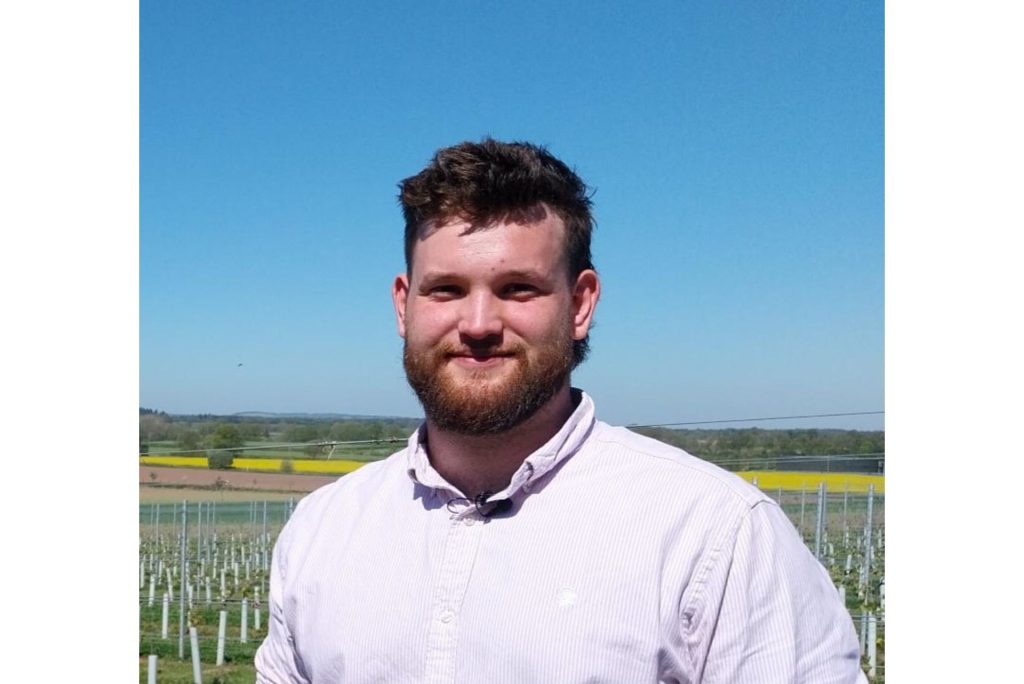
While still on her Bakkavor grad scheme, Greencore’s Anna Barr was an excellent line manager to placement student Max Tennant. With Anna’s support Max was given invaluable opportunities to contribute and learn.
The year of genuine responsibility in industry fuels students’ focus and professionalism which they apply to their final year of study when they return. One of the high points of this job is the chance to witness transformed students starting their final years with such energy.
Employability
The industry collaboration in teaching and core skills development, industry support in placement years all adds up to relevant degrees and relevant experience. Our experience is the opposite of clichés about universities producing too many graduates and high unemployment. Our approach continues to lead to award-winning employability from Harper Adams graduates – and many graduates returning to their placement employers. The university had an almost decade-long run as UK’s Best University for Career Prospects at the WhatUni Student Choice awards.
We also had 100% of our UK-based Food and Business undergraduates in work or further study in the Graduate Outcomes survey in 2025.
In June, leading higher education analysts WonkHE’s assessment of Graduate Outcomes figures for 2026 was simple: “If you want a job, study at Harper Adams.”
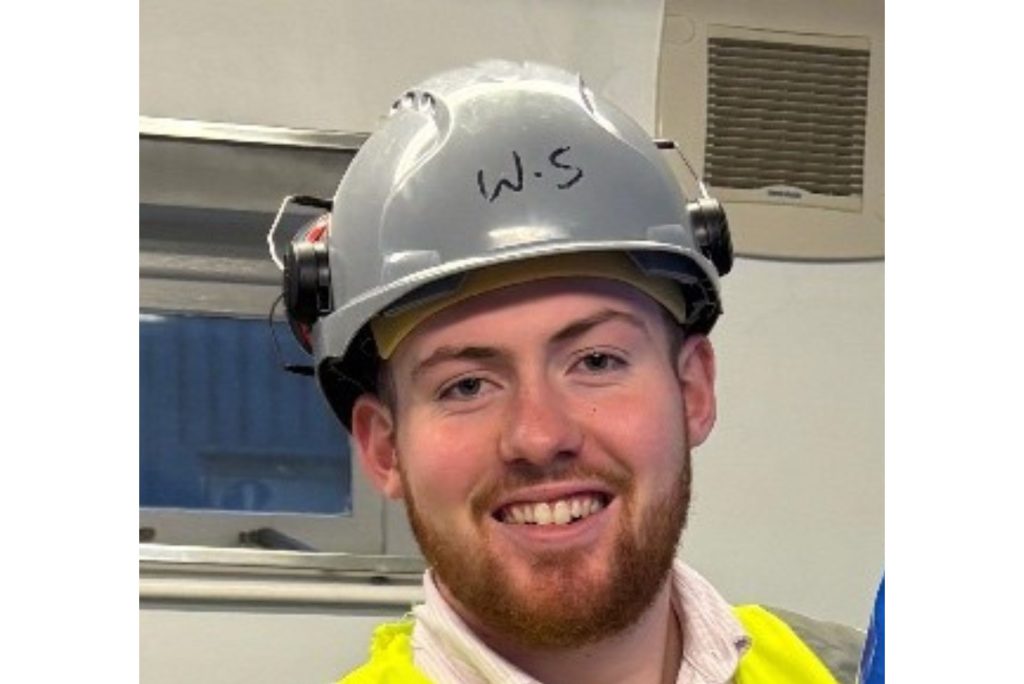
Will Severn returns to ABP as a graduate after his NPD placement with ABP at Northallerton.
High employability – so no problem, right? Sadly not. I recognise that one of the other factors driving our high employability figures is the unmet demand for graduate talent in the food industry. Analysis from the Institute of Grocery Distribution (IGD) and others identified a lack of food teaching in the school curriculum and lack of awareness among careers advisers of the wonderful opportunities in the food industry. The IGD’s Feeding Britain’s Future campaign – relaunched this year and supported by many businesses and universities – is an excellent initiative to raise the profile of careers in food and to take the industry into schools in an attempt to address this.
Harper Adams University is very glad to be part of Feeding Britain’s Future – just as we are also glad to work with ABP and Müller delivering Food Experience Days to students in years 12 and 13. I would rather be faced with the challenge of finding placements for all our students than telling employers we don’t have enough applicants for them. Here it is not “too many graduates” but “more undergraduates please!” We simply need more students to meet industry demand.
Apprenticeships and workforce development
I am sure industry efforts including Feeding Britain’s Future will succeed but I also see that more immediate solutions are required. There are other routes for food industry recruits to access the value of what we do at Harper Adams. Most obviously, our Food Industry Technical Apprenticeship is used by businesses both to recruit talent but also to upskill talent identified within the workforce.
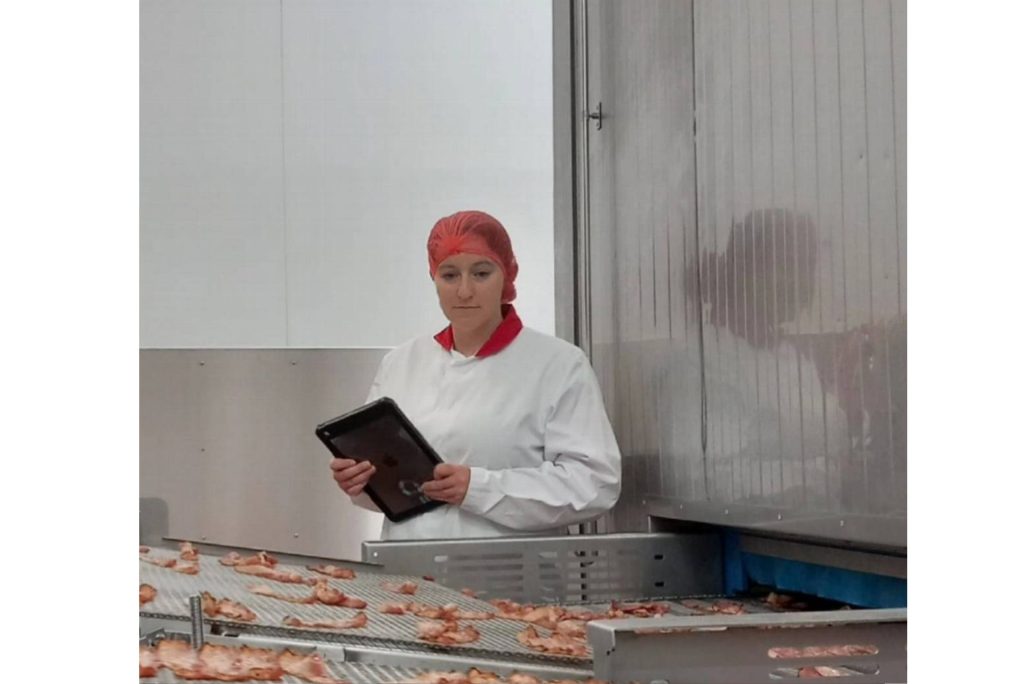
A project set during Kerry Roberts’ Food Industry Technical Professional apprenticeship was used by her employer, Pilgrim’s Europe, to improve waste and quality on its sweet cure bacon line in Bodmin.
In addition to undergraduate degrees and apprentices, businesses can use Harper Adams to help their workforce development through training courses. Training is offered in, for example, Animal Welfare and Meat Processing and in Managing the HACCP System for the Meat Industry. We have also created and delivered bespoke courses, including leadership development for Dunbia graduates and supervisors. We will listen to industry in our design of short courses as well as listening to industry in designing our undergraduate degrees.
Confidence and collaboration
Despite all the challenges that universities are facing, we are doing a good job, working with industry to make our teaching relevant, supporting development of skills that industry needs. We offer different ways for industry and students to access our education. We are proud to be part of a national solution to the national problem of recruitment in food, and we want more students so we can help more. But our confidence only comes from our collaboration with industry. Thank you to our many partners – alongside you we look forward to solving the recruitment challenges in food.
If reading this has inspired you to work with us or use our services, do get in touch with me (aboot@harper-adams.ac.uk) or our apprenticeship manager Carol Rogers (crogers@harper-adams.ac.uk).

Based in Shropshire, Harper Adams University is a leading specialist teaching and research institution for food production and technology, land management, animal health and agriculture. For more information, visit www.harper-adams.ac.uk.
Alastair Boot is principal lecturer and placement manager at Harper Adams University with experience in farming and retail sectors. His teaching focus is on leadership and food retail marketing, with special interest in employability and retailer-supplier relations.