
Seafish, the public body that supports the UK’s seafood sectors, offers its help across every area of the supply chain from net to plate, including catching, farming, processing, wholesaling, fishmongering and foodservice.
As part of our Annual Plan for 2026/27, we refocused activities into three strategic outcomes: a safe and skilled workforce, smoother and expanding seafood trade and a resilient supply chain.
Training to support a safe and skilled workforce
At the heart of outcome one, a safe and skilled workforce, will sit Seafish’s onshore training work, which provides the vital training needed by employers, those working in the seafood sector and those looking for a career in it.
Our onshore training work contributes to our safe and skilled workforce outcome. We recognise the success of seafood businesses is dependent upon staff training. It helps employees grow their skills and knowledge whilst contributing to business growth.
Seafish develops and administers compliance training programmes, including food hygiene and skills-based courses such as fish quality assessment, to assist people employed in the onshore sectors.
Much of our training is delivered remotely, either by Microsoft Teams or Zoom, or by self-study eLearning programmes. This helps learners and their employers as it reduces both travel time and travel costs. However, some of our programmes are delivered in-person, too.
Nationally recognised qualifications
Most of the Seafish compliance courses contain seafood specific content and lead to a nationally recognised qualification jointly awarded with the Royal Environmental Health Institute of Scotland (REHIS).
For the first time, we have secured funding from Marine Fund Scotland to support the remote delivery of many of our onshore training courses along with a few face-to-face programmes for people working directly in the seafood industry in Scotland.This 100% funding is for training delivered by 31st March 2027.
We have also submitted a funding application to the Fisheries and Seafood Scheme to fund many of our onshore training programmes until 31st March 2028 for employees in the English seafood industry. A funding application will be submitted to Northern Ireland in due course, and we can fund learners working in a Welsh seafood business.
Delivering specialist skills training
Training programmes for the processing sector include:
- Food Hygiene at multiple levels with our Introductory and Elementary training packages available in multiple languages
- HACCP at Introductory and Elementary levels
- Elementary Health and Safety
- Food Authenticity and Integrity Verification for managers
- Food Allergens Management and Awareness for managers and supervisors
- Fish Quality Assessment
- Fish Smoking
The Seafish Fish Quality Assessment training programme has been completed by Port Health Officers and Environmental Health Officers.
Seafish has also piloted the delivery of a Food Fraud Prevention exercise in collaboration with the Food Standards Agency National Food Crime Unit. This was for people working in processing businesses and we’re delivering another exercise in the autumn of 2026.
Daniel Wales, technical manager, Hilton Foods Seachill, Grimsby, commented on the course: “Two of my colleagues attended the Food Fraud Prevention exercise. They both said it was really good and interactive, with the attendance of other seafood businesses. It was good to understand how they would deal with food fraud. They believe that staff employed outside technical and quality teams would also benefit from attending.”
Seafish also offers three training programmes for the bivalve shellfish sector:
- Bivalve Purification Operations
- Bivalve Purification Management
- Official Control Sampling
Our Official Control Sampling training course can also be completed by Local Authorities, while the two-day Bivalve Shellfish Hygiene Verification training course is aimed at environmental health officers who inspect bivalve purification centres.
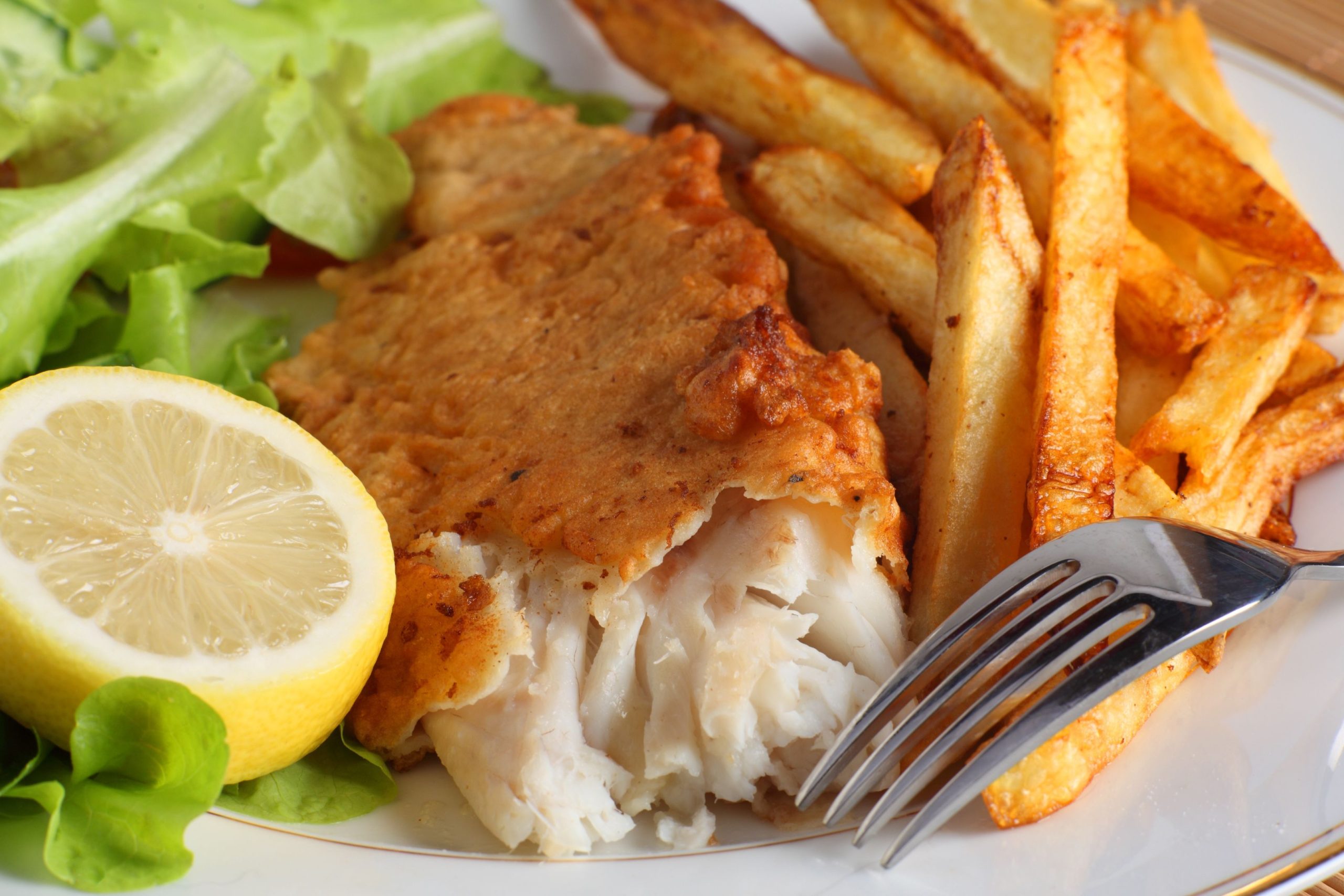
For staff working in fish and chip shops, they can undertake our online Elementary Food Hygiene and online Elementary Health and Safey self-study programmes. The Food Hygiene programme includes a segment on essential food hygiene for fish friers.
The Seafish Principles of Fish Quality Assessment (cooked) training programme is applicable to people who handle fish fillets including fish friers.
We also collaborate with the KFE School of Frying Excellence, which delivers practical fish frying training in Market Deeping, and we’re looking to explore training opportunities with the National Federation of Fish Friers (NFFF) who have a training school in Leeds.
Our online Elementary Food Hygiene and online Elementary Health and Safey self-study programmes are also utilised by fishmongers, and our Principles of Fish Quality Assessment (raw) training course is suitable for fishmongers as they buy and sell whole fish.
Danna McGregor came to the seafood industry with more than 30 years of experience in business support administration. Securing a role at G Armstrong Fishmongers in Edinburgh, she reached out to our onshore training team to undertake some professional training to support her career development.
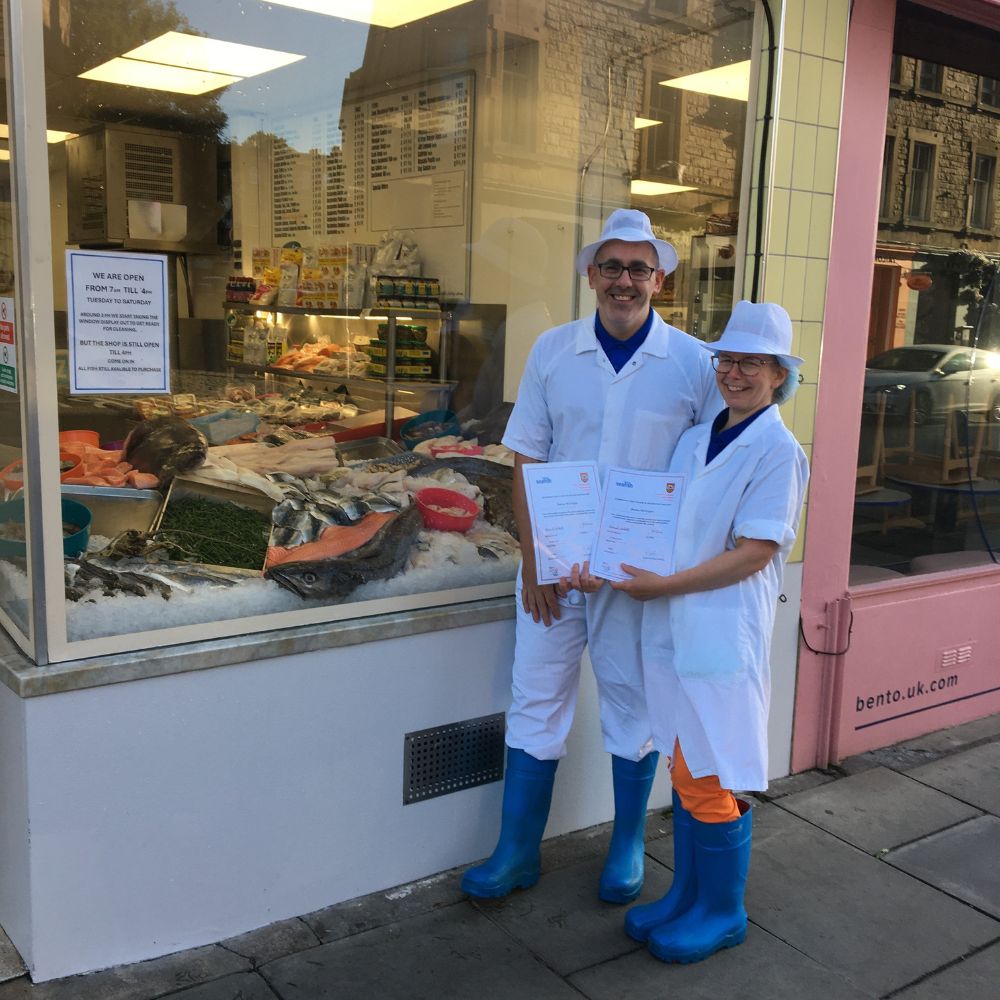
McGregor commented: “I started working at G Armstrong Fishmongers in October 2024 and approached Seafish for some training advice. It was able to offer me an online Elementary Food Hygiene training programme, an Introduction to HACCP training course and an online Elementary Health and Safety training programme. Completing the training and passing the online invigilated exams helped me acquire new knowledge, which I’m able to use on a daily basis at work. It helps me feel more confident in my teamwork and customer service. Should any future training requirements arise, Seafish will be my first point of contact for support.”
Attracting workers through apprenticeships
Seafish engages with training providers and assessment organisations that offer apprenticeships. Apprenticeships combine practical, on-the-job training with additional study. They can support staff development, help boost productivity and the quality of product, and be completed by existing staff as well as new recruits. The revised version of the Level 2 Fishmonger Apprenticeship in England was approved in January 2025, and the new occupational standard was made available to apprentices from 19th March 2025. As well as a pathway for in-store retail fishmongers, there is also a pathway for fishmongers working in processors or wholesalers. You can listen to Matthew Bell of assessment organisation FDQ talking about how an apprenticeship can work for your business here.
If you or your colleagues would like to find out more about our onshore training courses or apprenticeships, email the Seafish Onshore Training team at onshore@seafish.co.uk.
Seafish is a non-departmental public body (NDPB) set up by the Fisheries Act 1981 and sponsored by the Department for Environment, Food and Rural Affairs (Defra) and the Scottish, Welsh and Northern Irish devolved administrations.
It is focused on supporting three outcomes for the UK seafood sectors: a safe and skilled workforce; smoother and expanding seafood trade; a resilient supply chain.
Richard Wardell is an onshore training advisor at Seafish, overseeing the development and delivery of training for people working in the onshore sectors of the seafood industry.

Seafish is a non-departmental public body (NDPB) set up by the Fisheries Act 1981 and sponsored by the Department for Environment, Food and Rural Affairs (Defra) and the Scottish, Welsh and Northern Irish devolved administrations.
It is focused on supporting three outcomes for the UK seafood sectors: a safe and skilled workforce; smoother and expanding seafood trade; a resilient supply chain.
Richard Wardell is an onshore training advisor at Seafish, overseeing the development and delivery of training for people working in the onshore sectors of the seafood industry.