
The UK food-to-go market has experienced significant challenges in 2020 and will continue to be impacted by Covid-19 over the next three years, according to the latest forecast from IGD.
The new research, formed in consultation with the industry, predicts that the sector will decline by 43% to £10.8bn in 2020, a decrease of £8.1bn on 2019.
A degree of bounce-back is anticipated in 2021, with high levels of year-on-year growth off a low base. However, in 2022, despite continued high growth rates, the market will only return to 88% of 2019 levels, valued at £16.7bn.
Nicola Knight, senior food-to-go analyst at IGD, said: “Unsurprisingly, since the UK went into lockdown, almost all food-to-go shopping trips experienced significant declines. Where previous forecasts saw the sector growing at twice the rate of grocery retail, 2020 has seen a rapid change in consumer behaviours and daily routines that could have long term implications.
“Footfall in cities and transport hubs, on which many food-to-go businesses depend, has so far been slow to return. The shift to more homeworking in particular has had massive implications for food-to-go. Specialist operators with sites prevalent in affected locations are already adapting strategies to offset this long-term change in consumer behaviour.”
“The return will be gradual and may be subject to reversal; trends may differ by geographic area subject to local lock-downs. It is reasonable to assume that a degree of homeworking will form a part of the new normal in the short and long term, which may mean food-to-go businesses will adapt to fit in with their customers’ work patterns rather than wait for old habits to resume.”
IGD’s medium-long term predictions for food-to-go:
- Food-to-go specialists will be most affected as they are most likely to be located in city centres and transport hubs with footfall dependent on office workers, commuters and tourists. IGD anticipates store closures and estate sizes in 2022 will be smaller than 2019. Whilst some smaller players and new entrants may grow by moving into vacant city centre properties, economic conditions will mean many empty sites are not filled for some time.
- Coffee shops will be affected in a similar way, albeit to a lesser extent, as locations are more dispersed and have a strong local presence. Through innovation and evolution coffee shops and food-to-go specialists will start to recover somewhat in 2021 and regain market share from retail in 2022, although not to 2019 levels.
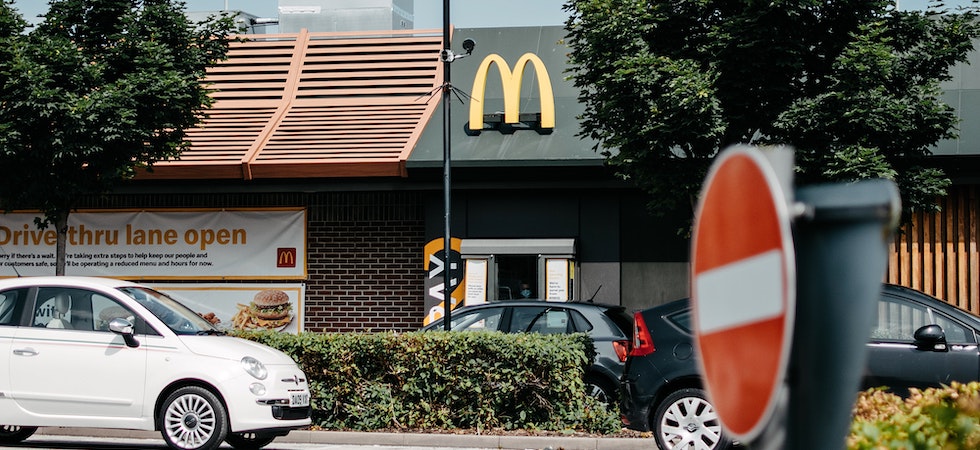
- Quick Service Restaurants (QSR) will be most resilient as it offers a value option for financially stretched consumers. Drive thru and delivery offers have also enabled the sector to adapt to local lockdown restrictions. QSR will benefit most from the changes to food-to-go consumption brought about by the pandemic, growing its share by 4.6 percentage points between 2019 and 2022.
- Retailers will benefit from increased visits where food-to-go crosses over with other shopping missions. Convenience stores in particular have and will continue to benefit from their local presence. Retail channels will grow market share, mainly during 2020 as food-to-go specialists and coffee shops are impacted by declines in commuter footfall.
Addressing how retailers and suppliers can navigate current and future challenges, Nicola Knight says: “Changes in consumer behaviours throughout this period offer up opportunities but food-to-go businesses need to be quick to grab them. Never has it been more important to know your customers, understand them and engage with them.
“Picnic sets for outdoor socialising, lunch boxes for home workers and meals to be heated at home are all examples of rapid deployment of new ranges adapted to current consumer needs. Responding this quickly requires staying close to customers, building strong partnerships with suppliers and an internal structure designed for fast decision-making.
“Well-developed digital loyalty, communications and ordering systems have a real role to play for businesses looking for an edge here. Engaging with customers in this way should also help retailers to understand where the demand has moved to if city centres and transport hubs continue to lose footfall.
“Delivery should also continue to form a part of retailer and operator strategies, particularly if local lockdowns progress. To offset the price of third-party delivery charges many operators are moving to delivery-only dark kitchens with lower overheads.”