

Ahead of the annual gathering of world leaders in Davos this week, Alvaro Lario, president of the UN’s International Fund for Agricultural Development (IFAD) warned of the urgent need to invest at speed and scale in long-term rural development to prevent recurring food crises and end hunger and poverty.
“We cannot continue to go from food crisis to food crisis. We should not have to see countries experiencing acute food insecurity over and over again. Extraordinary times call for extraordinary measures. We must take immediate and concrete actions to strengthen our failing food systems – this requires strong commitment and bold investment,” said Lario.
At Davos, Lario will be calling for a massive scale-up of investments in agriculture, and long-term rural development from governments, investors and private companies with the view to ensure nutritional security and food sovereignty, an issue that has become critical for developing countries. At least an additional US$30 billion per year in investments are needed according to pre-COVID19 estimates, now the costs are even higher.
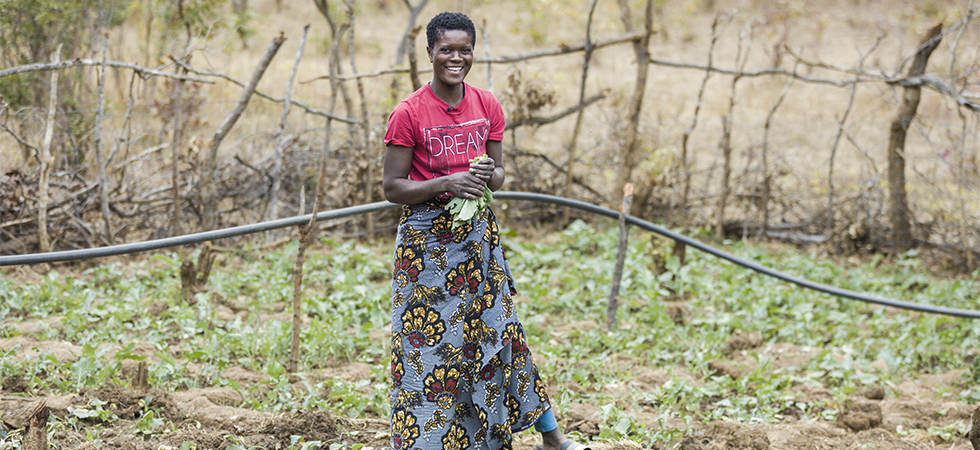
“Only long-term investments in rural economies can provide long-lasting solutions to hunger, under-nutrition and poverty. This is what will enable small-scale farmers to increase local production, better adapt to climate change, build short and local food chains, build and sustain local markets and commercial opportunities, and create small rural businesses. This approach makes a lot of economic sense,” said the IFAD President.
According to World Bank research, growth in agriculture is two to four times more effective at reducing poverty than growth in other sectors.
The world is experiencing an unprecedented food crisis due to the convergence of high food, energy and fertilizer prices linked to the war in Ukraine, and several climate shocks. Key drivers of hunger remain conflict, climate change and the economic slowdown and difficult recovery in the aftermath of the Covid-19 pandemic.
The number of people facing acute food insecurity soared – from 135 million in 2019 to 345 million in 2022. Currently, a total of 49 million people in 49 countries live on the edge of famine. One person in ten – about 828 million people – are currently suffering from hunger defined as chronic undernourishment. In addition, almost 3.1 billion people cannot afford a healthy diet. Increasingly world food consumption is concentrated on three main crops (wheat, maize and rice). An estimated 45 million children suffer from acute malnutrition, 149 million children have stunted growth and development due to a chronic lack of essential nutrients in their diet, while 39 million are overweight.
Despite global commitments to end hunger by 2030, donor support for agriculture has been stagnant at just 4 percent of total ODA for at least two decades. About 3 billion people live in the rural areas of developing countries and they rely to a significant extent on small-scale farming for their food and livelihoods.
In the years to come, extreme weather events will likely increase in frequency and magnitude, according to the Intergovernmental Panel on Climate Change (IPCC). Global food systems are at increased risk of disruption, with potential supply shortages and price hikes.
As the world becomes more fragile, building food sovereignty and security by strengthening local resilience, ensuring local production and well-functioning markets will become increasingly vital.
“We should not wait another minute to invest in rural areas. With climate change accelerating, we have a very narrow window of opportunity to help rural populations adapt, and continue to produce the food that they and their communities need to survive – which in turn is key to global health and stability,” said Lario.
Research shows that future crop yields could decline by up to a quarter by the end of the century with extreme weather events increasing in regularity and intensity. Also more than 35 per cent of the global cropland used to grow wheat and rice could be subject to damaging hot spells by 2050.
Small-scale farmers who produce one third of the world’s food receive less than 2 percent of global climate finance.